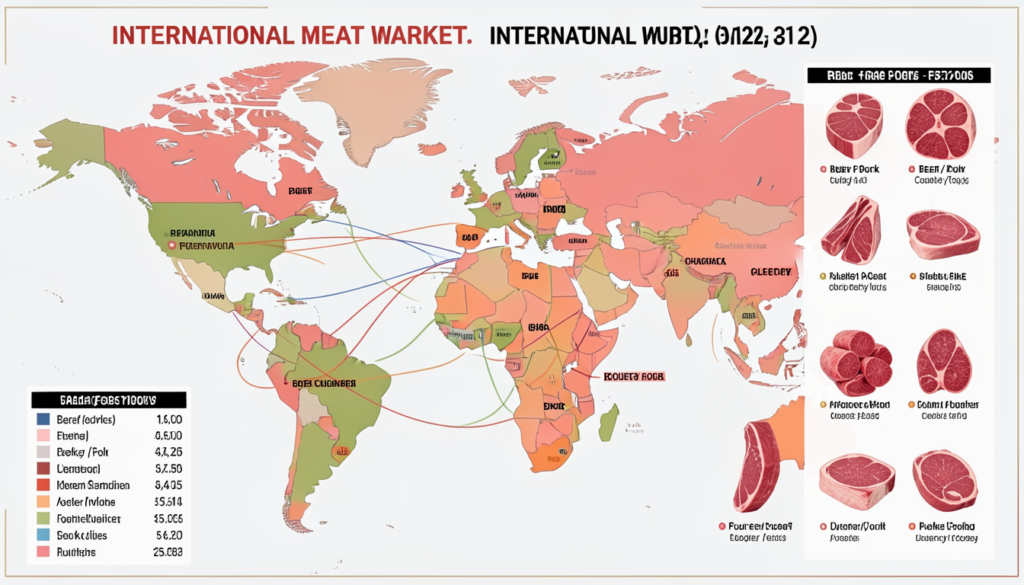
International Meat Market
The international meat market is one of the largest and fastest-growing sectors in global trade. From beef and poultry to pork and lamb, meat products are exported and imported across continents to meet rising consumer demand. Understanding this market helps businesses, investors, and even food lovers stay ahead.
Globalization, changing dietary habits, and rising income levels are fueling growth. Countries like the USA, Brazil, and Australia are leading exporters, while China, Japan, and Europe remain top importers. But what really drives this market? Factors include population growth, health trends, food safety standards, and evolving supply chains.
This guide breaks down the international meat market, trends, top players, pricing dynamics, and future prospects in a simple, easy-to-understand format.
What is the International Meat Market?
The international meat market refers to the global trade of meat products across countries. It includes all types of meat, such as beef, pork, poultry, lamb, and specialty meats. Businesses, wholesalers, and exporters participate in this market, ensuring meat moves from farms to tables worldwide.
Trade regulations, tariffs, and international agreements play a big role in shaping the market. For instance, countries with strict food safety standards often demand certified and traceable meat products. Meanwhile, developing nations focus on affordability and accessibility.
Understanding the international meat market requires looking at both supply (producers and exporters) and demand (consumers and importers). This knowledge helps businesses plan investments, set prices, and expand globally.
Key Drivers of the International Meat Market
Several factors influence the international meat market:
- Population Growth – More people equals more demand for protein.
- Rising Income – As countries grow richer, meat consumption increases.
- Urbanization – City dwellers prefer packaged and processed meat products.
- Health Awareness – Lean meat and organic meat are gaining popularity.
- Global Trade Policies – Tariffs and free trade agreements affect prices and availability.
These factors create opportunities for exporters and challenges for those who can’t meet international standards.
Top Exporting Countries
Some countries dominate the international meat market:
| Country | Meat Focus | Notes |
| USA | Beef & Poultry | Advanced supply chains; strong exports to Asia & Middle East |
| Brazil | Beef & Poultry | Large production capacity; cost-effective exports |
| Australia | Beef & Lamb | High-quality meat; strict animal welfare standards |
| Germany | Pork | Key supplier to European Union markets |
| India | Buffalo Meat | Major supplier to Asia; halal-certified products |
These exporters influence global prices and trends significantly.
Top Importing Countries
Countries with high meat demand include:
| Country | Meat Demand | Notes |
| China | Pork & Beef | Largest global importer; rising middle-class consumption |
| Japan | Beef & Poultry | Prefers high-quality and safe meat products |
| USA | Lamb & Beef | Imports for diversity in meat consumption |
| European Union | Pork & Beef | Regulated market with strict standards |
Knowing the major importers helps exporters plan their strategies effectively.
Types of Meat in Global Trade
The international meat market deals with multiple types of meat:
- Beef – Most traded; high demand in Asia and Europe.
- Pork – Dominant in China and the EU.
- Poultry – Quick production cycle; growing globally.
- Lamb & Mutton – Popular in Middle East, Australia, and Europe.
- Specialty Meats – Game meat, goat, and processed meat products.
Each type has its unique market trends, pricing, and export regulations.
Emerging Trends in the International Meat Market
- Plant-Based Alternatives – Some consumers shift to vegan or hybrid meat.
- Sustainable Practices – Eco-friendly farming and lower carbon footprint meats.
- Traceability & Safety – Consumers demand origin and safety verification.
- Premium & Organic Meat – Growing segment for affluent buyers.
- Digital Supply Chains – Technology streamlines exports and inventory management.
Keeping an eye on trends is crucial for businesses to stay competitive.
Challenges in the Global Meat Industry
The international meat market faces several challenges:
- Disease Outbreaks – Avian flu or swine fever affects supply.
- Trade Barriers – Tariffs or sanctions limit market access.
- Environmental Concerns – Meat production impacts climate change.
- Price Fluctuations – Fuel, feed, and labor costs impact profitability.
Companies must innovate and adapt to survive these challenges.
How Prices Are Determined
Meat prices in the international market depend on:
- Supply and demand balance
- Export/import tariffs
- Production costs (feed, labor, transport)
- Quality and certifications
Understanding pricing helps exporters and importers negotiate better deals.
Opportunities for Businesses
The international meat market offers opportunities for:
- Exporters targeting high-demand regions
- Premium meat producers offering organic or sustainable options
- Logistics companies optimizing supply chains
- Technology solutions for traceability and food safety
Businesses that align with trends can thrive in this growing sector.
Future Outlook
Experts predict steady growth in the international meat market. Rising global population, urbanization, and protein demand will continue driving trade. However, sustainability, plant-based alternatives, and stricter regulations may reshape the landscape.
Businesses need to innovate, stay compliant, and cater to evolving consumer preferences to succeed in the next decade.
FAQs
1. What is the international meat market?
It is the global trade of meat products like beef, pork, poultry, and lamb between countries.
2. Which country exports the most meat?
The USA, Brazil, and Australia are top exporters with advanced supply chains.
3. What factors drive meat demand globally?
Population growth, rising income, urbanization, health awareness, and trade policies.
4. How do tariffs affect the international meat market?
Tariffs increase costs for importers, affecting demand and profitability.
5. Are plant-based alternatives affecting meat trade?
Yes, they are creating competition and influencing consumer choices.
6. What’s the future of the international meat market?
Growth will continue, but sustainability and safety will shape trends.
Conclusion
The international meat market is dynamic, complex, and full of opportunities. Businesses that understand trends, regulations, and consumer preferences can thrive globally. From exporters in Brazil to importers in China, every player must adapt to ensure quality, sustainability, and profitability.
If you’re a business owner, investor, or food enthusiast, staying updated on this market gives you a competitive edge. Explore, analyze, and take action to leverage the booming global meat trade.