everton vs man united
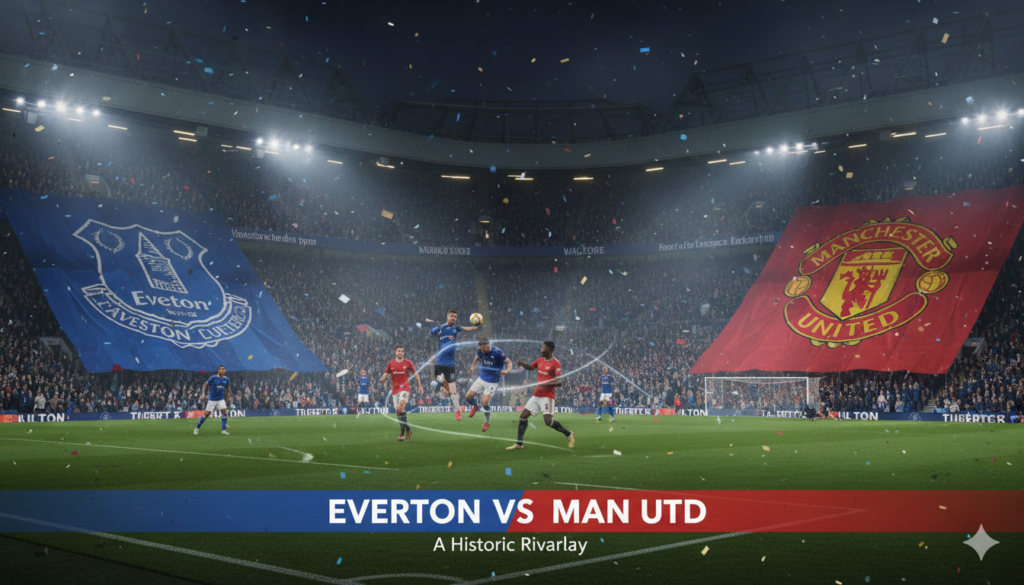
The fixture between Everton Football Club and Manchester United Football Club is one of English football’s most storied matchups. Since the late 19th century, these two clubs have met on the pitch many times, producing drama, skill, controversy, and memorable moments. More than a simple match, Everton vs Man United reflects centuries of footballing culture — from local pride and tactical evolution to iconic players and unforgettable goals.
Though Everton and Manchester United come from different regions — Liverpool and Greater Manchester respectively — their rivalry has often gone beyond geography. It represents a clash of traditions, histories, and fanbases that are among the most passionate in England.
Origins of the Rivalry
Everton was founded in 1878, while Manchester United began life as Newton Heath in 1878 before adopting its modern name in 1902. The two clubs first met competitively in the Football League in 1906, marking the start of a series that would grow over decades into one of national importance.
Early encounters were competitive but lacked the intensity that would later come with massive successes on both sides. Manchester United’s rise under managers such as Sir Matt Busby in the mid‑20th century and Everton’s golden era during the 1980s with Howard Kendall added depth and significance to the fixture. Matches began to carry deeper meaning as trophies, pride, and rivalry were on the line.
Historic Moments Between Everton and Manchester United
Over more than a century of competition, Everton vs Man United has produced unforgettable moments.
One such moment came in 1969 when Everton recorded a resounding 5‑0 victory over Manchester United at Old Trafford. Goals from Alan Whittle, Joe Royle, and others gave the Toffees one of their most emphatic wins in the fixture’s history.
In the early 1990s, as the Premier League era began, both clubs were vying for titles and cups. The fixture became even more competitive — packed with tactical battles and fierce tackles. In 1992‑93, Manchester United won the first Premier League title while Everton struggled, highlighting the divergent paths both clubs were entering.
Another iconic chapter was 2009, when Everton recorded a 2‑0 away win at Old Trafford. The victory was significant because it snapped Manchester United’s long unbeaten home run in the league, giving Everton fans one of the most satisfying wins in recent memory.
Tactical Evolution in the Fixture
Everton and Manchester United have often approached their matches with distinctive tactical ideas.
In the 1980s, Everton’s style was built on physical robustness, quick wingers, and clinical centre‑forward play. Under Howard Kendall, they played an organized game that combined flair with discipline. For Manchester United, the Busby and later Ferguson eras brought attacking football through fluid forward lines, wing play, and a focus on youth development.
During the Premier League years, managerial changes on both sides influenced how this fixture was approached. Sir Alex Ferguson’s Manchester United often dominated possession and used counter‑attacking threats from wingers like Ryan Giggs and David Beckham. Everton, while sometimes more defensive in setup, focused on disciplined midfield play and quick transitions.
The tactical face‑offs often made these matches unpredictable. A United attack against a solid Everton backline frequently became a test of patience, pace, and defensive resolve.
Key Players Who Defined Matches
Over decades, certain players stood out in Everton vs Man United matches.
For Everton
- Dixie Dean – Everton’s legendary goalscorer whose record‑breaking feats still resonate.
- Peter Reid – The tough‑tackling midfielder who embodied Everton’s spirit.
- Graeme Sharp – Reliable striker with a knack for big goals.
- Tim Cahill – Modern era fan favourite known for aerial power and passion.
For Manchester United
- Bobby Charlton – United legend whose influence stretched beyond club rivals.
- George Best – One of football’s greatest dribblers; could change games single‑handedly.
- Eric Cantona – A talisman in the 1990s who brought flair and confidence.
- Paul Scholes – Midfield maestro whose passing often dictated matches.
Players like these didn’t just participate in Everton vs Man United — they brought identity and emotion to the fixture, creating moments that fans still remember vividly.
Memorable Matches That Still Resonate
Beyond individual moments, some full matches have become part of English football folklore.
A standout instance is the 2005 FA Cup tie at Goodison Park, where Everton defeated Manchester United 2‑1. The match was intense, with standout performances from Everton’s midfield and defence. For many Everton supporters, it signified resilience against one of England’s biggest clubs.
Another classic came in 2010, when Manchester United showed top‑class finishing to beat Everton 3‑0 at Old Trafford. Wayne Rooney, a product of Everton’s own academy, scored against his former club — giving extra narrative weight to the game.
In league play, fixtures in the 1990s often saw tight battles, moments of brilliance, and tactical intrigue — characteristics that reflected both clubs’ ambition to be competitive at the highest level.
Fan Culture and the Fixture
For supporters, Everton vs Man United is more than a game — it’s an emotional event.
Evertonians often emphasize pride in history, loyalty, and resilience. Goodison Park, one of English football’s oldest stadiums until its move to Bramley‑Moore Dock, was known for its intense atmosphere. Everton fans have celebrated victories over United almost like cup finals, reflecting how big the fixture feels to them.
Manchester United’s global fanbase enters Fixtures with confidence rooted in long periods of success. United supporters often pride themselves on the club’s history, trophies, and influence on world football. Matches against Everton are approached with intensity — fueled by history, regional rivalry, and the desire to assert dominance.
This clash of fan cultures — one steeped in blue‑collar resilience and local pride, the other projecting global ambition and success — adds emotional weight to each meeting on the pitch.
Recent Trends in the Derby
In the modern Premier League era, few fixtures are easy to predict, and clashes between Everton and Manchester United are no exception.
Manchester United has often held the advantage in league standings, reflecting larger resources, bigger squads, and recent trophy success. However, Everton has consistently threatened with moments of tactical discipline and occasional upsets. Matches have continued to swing on individual brilliance, errors, and tactical discipline.
The fixture’s narrative in recent seasons has focused on each club’s ambitions — United seeking a return to consistent title challenges, and Everton striving to reestablish itself among England’s elite after turbulent seasons.
The Importance of the Derby for Both Clubs
For Manchester United, a win at Everton means maintaining momentum in league progress, asserting authority, and fulfilling expectations from fans and pundits. Success against teams like Everton is often seen as a barometer for how far United might go over a season.
For Everton, success against Manchester United represents more than three points. It signals belief, capability, and pride — letting the world know that Everton can compete with the best. It inspires supporters and players alike, contributing to confidence for the rest of the campaign.
Whether the fixture brings joy or heartbreak, the clash always carries significance for both clubs — in history, momentum, and emotional impact.
What This Fixture Means for English Football
Everton vs Manchester United stands as a symbol of English football’s tradition. It reminds fans why football thrives on history, rivalry, and passion. While some derbies are driven by geography or politics, this match is rooted in competition, respect, and legacy.
It also reflects the evolution of the English game — from early Football League days through to the global spectacle of the Premier League. The fixture showcases how clubs with different sizes, resources, and histories can still produce captivating football.
Conclusion
The Everton vs Manchester United rivalry remains one of English football’s most compelling matchups. Spanning over a century, it has delivered iconic moments, unforgettable goals, and emotional duels that resonate with supporters on both sides.
From historic wins to tactical chess matches, from legendary players to passionate fan culture, this fixture is about more than scoring goals — it’s about identity. Whether viewed through the lens of statistics, emotion, or tradition, Everton vs Man United continues to be a highlight of each season. As football evolves, this classic rivalry remains a constant — reminding fans why they fell in love with the beautiful game in the first place.
FAQs
What makes the Everton vs Manchester United rivalry special?
This rivalry is special because of its historic roots, competitive history, and the emotional weight it carries for both fanbases. Over more than a century, the fixture has showcased tactical battles, legendary players, and dramatic moments that define English football’s rich tradition.
How many times have Everton and Manchester United played each other?
Everton and Manchester United have played well over 200 competitive matches across league and cup competitions. While exact numbers change with each season, the rivalry is among the most frequent in English football history.
Who has more wins in the derby?
Historically, Manchester United has more wins in head‑to‑head matchups due to periods of sustained success. However, Everton has enjoyed memorable victories and upsets, especially in certain eras.
Who are some legendary players in Everton vs Man United matches?
Iconic figures include Dixie Dean and Tim Cahill for Everton, and Bobby Charlton, George Best, and Wayne Rooney for Manchester United — players who have left unforgettable impressions on this fixture.
What is the significance of this match for fans?
For fans, the game represents pride, passion, and history. A win can uplift a season, fuel rivalry debates, and create lasting memories. For many supporters, this clash isn’t just a fixture — it’s a statement.