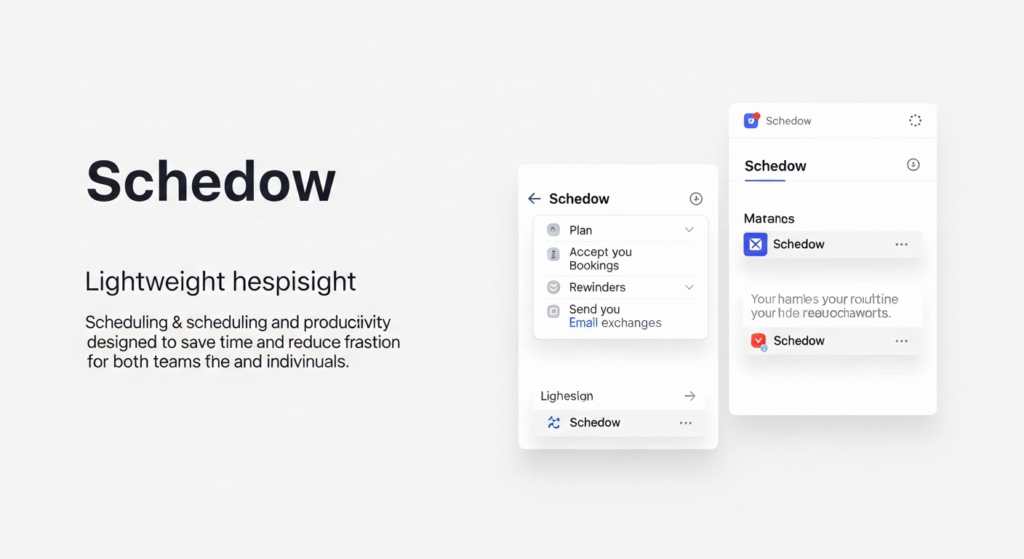
schedow is a fresh name you might see when searching for better ways to manage time and bookings. Think of it as a light, helpful assistant that lives next to your calendar. It helps you plan meetings, accept bookings, send reminders, and reduce the back-and-forth emails that steal hours from your day. If you want a smoother daily routine or a smarter way to replace messy scheduling, Schedow aims to do that work for you. Sources that describe Schedow present it as a scheduling and productivity platform built to save time and reduce friction for teams and individuals.
What is Schedow? A simple definition
At its core, Schedow is a scheduling tool and productivity platform. It combines a calendar, booking pages, and automation into one place. Users can offer time slots, accept appointments, and auto-send reminders. For small businesses, consultants, or busy people, that means fewer missed meetings and more clear, predictable time. Schedow’s branding and product pages call it a “one-click smart scheduling tool,” emphasizing ease and automation. That description appears consistently across official and review pages.
Why Schedow matters for everyday life
We all juggle tasks, meetings, and deadlines. Schedow tries to be the quiet helper that keeps that juggling from turning into chaos. When your calendar, bookings, and reminders live in one place, you make better decisions. That saves time and mental energy. For freelancers, it can mean fewer late cancellations. For teams, it can mean simpler coordination. Many reviews and guides that explain Schedow highlight these everyday gains: clarity, fewer scheduling errors, and more predictable work hours.
Key features explained in plain words
Schedow offers several common-sense features. You get a sharable booking link, automated reminders by email or SMS, calendar syncing, and simple rules for availability. Some versions add team scheduling and time buffers. The interface usually focuses on minimal clicks so people can book quickly. That mix of features is what most productivity tools aim for, and Schedow positions itself clearly in that space.
How Schedow compares to old-school scheduling
Before tools like Schedow, scheduling meant long email threads and guessing people’s free times. Now you can share a link, let someone pick a slot, and the meeting appears on both calendars. Schedow shortens the loop by automating reminders and confirming bookings. When it works well, everyone wins: fewer missed appointments, clearer expectations, and less time lost to admin. Many write-ups that introduce Schedow emphasize this shift from manual to automated scheduling.
A quick real-life example
Imagine you are a freelance designer. You post a booking link on your site so potential clients can choose 30-minute calls. One week you get text reminders automatically before meetings. You add short buffer times so you never overlap appointments. With Schedow, that whole chain — from booking to reminder — happens without phone calls. That’s how the tool can change a week of chaotic scheduling into a calm week of focused work. This example reflects common user stories around scheduling platforms.
Who should consider using Schedow?
If you meet with people, you may benefit. Freelancers, coaches, consultants, customer-success teams, small clinics, and solopreneurs often need booking tools. Even small teams can use Schedow for internal coordination. If your work involves time slots, repeat calls, or intake meetings, a scheduling platform helps. Reviews and guides that cover Schedow keep naming these common user groups.
Setting up Schedow — step by step (simple)
First, create an account on Schedow or sign in with an email. Next, connect your calendar so the tool knows your availability. Then, create a booking page — name the meeting type and set the duration. Choose buffer times and working hours so bookings won’t conflict. Finally, copy your booking link and share it. That quick setup is typical for scheduling tools and is described in Schedow product summaries.
Tips to get the most from Schedow
Use clear meeting names like “30-minute intro call.” Add a short booking form to learn what the meeting is about. Set buffer time between appointments. Turn on reminders to lower no-shows. Sync Schedow with your main calendar so double bookings won’t happen. Keep your booking link visible on your site or email signature. These small habits make Schedow more effective and are recommended across guides for scheduling apps.
Designing your booking page so people click
A good booking page is short and clear. Use a friendly headline. State what the meeting is and how long it takes. Offer a few time zones or detect them automatically. Keep required fields to a minimum to reduce friction. A pleasant booking experience increases conversions and reduces back-and-forth. Many Schedow-style platforms emphasize fast, low-friction booking pages for this reason.
How Schedow handles cancellations and rescheduling
Good scheduling tools give both hosts and guests flexible options. Schedow typically allows rescheduling with automatic updates and sends confirmations when changes happen. You can set cancellation deadlines and rules to protect your schedule. These options help keep your time predictable and fair to all parties. Guides on scheduling platforms often highlight these features as essential to a smooth booking flow.
Integrations and syncing — getting calendars to play nice
A key value of Schedow is calendar sync. Link Google Calendar, Outlook, or other calendar apps so bookings update automatically. Integrations with payment or CRM tools are sometimes available or possible via connectors. That means you can accept payments for booked sessions or add a contact to your CRM after a meeting. Product pages and third-party reviews list these integration benefits as typical selling points.
Pricing and value — is Schedow worth it?
Pricing varies between tools, but the real question is value. If Schedow saves you hours each week, reduces no-shows, and simplifies client onboarding, it can pay for itself quickly. Look at features like the number of booking types, reminders, team seats, and integrations when comparing plans. Several review pages encourage users to weigh time saved against monthly fees to judge value.
Security and trust — what to check
When you add scheduling to your workflow, check a few things. Does Schedow use secure connections (HTTPS)? How does it store data? Are reminder messages compliant with local messaging rules? Does it follow privacy guidelines? These questions matter when booking personal or sensitive meetings. Reputable guides suggest reading privacy pages and terms before making a final choice.
Common problems and how to fix them
You might see double bookings if calendars aren’t linked correctly. Reminders may fail if contact info is incorrect. Booking pages may show wrong times if time zones aren’t detected. Fixes include re-syncing calendars, testing reminders, checking time zone settings, and asking guests to confirm their time zone. These troubleshooting steps come from common experiences users share when adopting scheduling tools.
Accessibility — making Schedow work for everyone
A good scheduling page works on phones and desktop. Use readable fonts, clear labels, and short instructions. Make forms keyboard-friendly and screen-reader compatible. If Schedow or any scheduling tool shows attention to accessibility, it reaches more people and reduces friction. Inclusive design helps make booking easy for all users, and it’s a simple step toward better service.
My honest take — when Schedow shines and when to look elsewhere
Schedow shines when you need a tidy, automated booking flow without heavy setup. It’s great for solo pros and small teams. However, if you need deep custom workflows, advanced enterprise features, or niche integrations, other tools might fit better. Always match the tool to your needs, not the other way around. From what product pages and guides say, Schedow sits squarely in the user-friendly productivity niche.
Growing with Schedow — tips for scaling use
Start with one booking type, then add more as you learn what clients need. Use short intake questions to triage requests. If you hire team members, create team pages or shared pools of availability. Automate simple follow-ups and hand-offs to keep your schedule predictable. These growth steps are common in guides for scheduling platforms that aim to scale from solo use to small-team coordination.
SEO and content ideas for a Schedow booking page
If you share a public booking link, treat it like a small landing page. Use a clear title with your name and service. Add a short description of what people will get from the meeting. Use the word “book” and service type in headings. Keep content short and scannable; people want clarity. These tips are standard for booking pages and help convert visitors into booked appointments.
Many people look up srcampbell89 to follow updates, posts, or interactions associated with this username. It often appears on platforms where community engagement and networking are crucial. The user behind srcampbell89 is known for sharing insights, updates, or entertainment content that attracts followers interested in similar topics. Tracking this account can provide insights into trends and discussions relevant to its niche.
Conclusion
Schedow is one of several modern tools that make time management easier. It reduces friction, automates reminders, and helps you protect focused work time. If you often trade many emails just to schedule one call, try creating a booking link and test it for a week. Simple tools like Schedow can free hours for the work that really matters. For many users, that shift from busywork to focused work is the real payoff.
(FAQs)
What exactly does Schedow do?
Schedow organizes bookings, sends reminders, and syncs with calendars. It provides a sharable booking page people can use to pick times. This reduces manual scheduling and missed meetings.
Is Schedow easy to set up?
Yes. Most users can connect a calendar, create a booking type, and share a link in minutes. Setup speed is one of the reasons people try tools like Schedow.
Can I accept payments through Schedow?
Payment support depends on integrations. Some scheduling platforms let you add payments via connectors. Check Schedow’s integrations or support pages if payments are required for your bookings.
Will Schedow prevent double bookings?
When calendar sync is active and set correctly, Schedow should block conflicts. Always test by creating sample events and checking sync settings.
Is Schedow safe for client information?
Security varies by provider. Look for HTTPS, a clear privacy policy, and data handling statements. If you handle sensitive data, verify compliance with local privacy rules.
How many booking types should I create?
Start with a few: an intro call, a full consultation, and a follow-up. Add more as you learn client needs. Keep options simple to avoid decision fatigue. This approach is recommended for scheduling tools broadly.