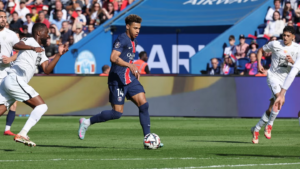
In a league season with 991 goals and 2.61 goals per match, Ligue 1 2016–17 was not short on attacking output overall. Yet beneath that headline, a subset of teams consistently kept the ball without turning their possession into meaningful shot volume, illustrating the gap between controlling the game on paper and actually threatening the goal.
Why It Makes Sense to Study High Possession, Low Shooting
Ball possession has long been viewed as a proxy for control, but research across European leagues shows that high possession does not automatically guarantee better results or more chances. When a side circulates the ball without breaking lines or creating dynamic situations, its possession becomes sterile: it racks up passes and time on the ball but produces few shots or high‑value opportunities. In 2016–17 Ligue 1, where leading clubs like PSG, Marseille, Lyon, Lille, and Monaco regularly topped possession tables in broader samples, the more interesting question for bettors was which teams sat on the ball without matching that control with shot counts or xG, skewing how totals and outcome markets should be interpreted.
How Possession Linked – and Didn’t Link – to Output in 2016–17
Studies of the 2016–17 and 2017–18 seasons across multiple leagues suggest a positive but imperfect correlation between high possession and success: teams with more of the ball tend to finish higher but not in a straight line, and some high‑possession sides underperform badly in chance creation and goals. In Ligue 1, the dominant clubs combined possession with strong shot metrics and scoring, yet a band of technically solid mid‑table teams appeared comfortable circulating the ball in harmless areas, producing fewer shots than their territory might imply. That disconnect showed up particularly against compact blocks, where repetitive passes in the same channel increased turnover risk more than chance quality, a pattern echoed by broader analyses of possession football’s limitations.
Typical Traits of High-Possession, Low-Shot Ligue 1 Teams
Teams that fall into this category usually share specific tactical habits that explain the gap between ball share and attempt volume. They favour short passing in front of the opposition shape, rarely attempting risky line‑breaking balls or aggressive dribbles in central zones; when they do progress, they often recycle play again rather than cross or shoot from imperfect positions. In Ligue 1 terms, these sides generally sit behind the very top clubs in talent, so they neither enjoy the individual quality to unlock deep blocks consistently nor accept the chaos of heavy crossing or long‑shot strategies. As a result, they can post healthy possession figures but end up producing fewer shots and a lower xG per minute of possession than both elite and more direct teams.
Mechanisms That Turn Possession into Sterility Instead of Chances
The mechanics of sterile domination can be traced to how teams use width, verticality, and risk. When a side repeats passes within the same longitudinal lane, it increases the chance of predictable turnovers without stretching the defence, a pattern identified in wider studies of possession structure. Without frequent switches of play or decisive passes into the half‑spaces, defenders can shuffle as a unit, keeping central areas crowded and forcing attackers to receive with their backs to goal. To avoid turnovers, midfielders then play safe passes backwards or sideways, sustaining possession time but reducing the frequency of shots, especially from inside the box. Over a season like 2016–17, those habits create a distinct statistical profile: high possession percentages paired with middling goals and modest shot counts per game, even when facing weaker opponents.
Table: Conceptual Profiles of High-Possession, Low-Shot Teams in 2016–17
To make this more concrete, it helps to sketch archetypes that match patterns seen in Ligue 1’s possession and performance landscape, even if public 2016–17 team‑by‑team possession and shot tables are less accessible than more recent data.
| Profile type | Possession habit | Shot and goal pattern | Betting implication |
| Technical mid-table circulator | 53–57% ball share vs peers | Few shots per possession; low xG per attack | Unders more appealing than raw possession suggests |
| Big-name rebuild in transition | High ball share, slow tempo | Long sterile spells, occasional bursts | Beware assuming high totals purely from status |
| Compact side with cautious full-backs | Moderate possession, high recycling in own half | Very selective shots, many low‑event games | Matches trend toward tight scorelines |
| Elite possession side with final-third punch | High possession plus aggressive final passes | High shot volume and goals | Distinct from “keep but not shoot” archetype |
Interpretation matters here: not every high‑possession team in 2016–17 was toothless—PSG and Monaco, for example, matched or exceeded their possession with shots and goals. The real interest lies in identifying the second and third rows: clubs that looked in control on basic stats and to the naked eye but repeatedly turned that control into few attempts and modest scoring, which in turn shaped totals and “dominance” perceptions in misleading ways.
Where UFABET Can Fit into Reading Possession-Heavy, Low-Shot Teams
For a bettor, the challenge is translating this qualitative understanding into actual decision‑making in a consistent environment. Suppose you identify that certain Ligue 1 2016–17 teams routinely posted possession north of, say, 55% yet ranked closer to mid‑pack in shots per game and xG—especially against deep‑defending opponents. If you simply looked at ball‑share, you might be tempted to back overs or dominant wins in their favour, only to be repeatedly frustrated by 1–0 or 1–1 outcomes. To avoid that trap, you need a place where you can match your possession‑shot profile with market behaviour: how goal lines are set, how match odds move, and how often those games stay below expectations. Within that frame, using a betting platform such as แทงบอลออนไลน์ ufabet as one of your reference environments allows you to monitor how bookmakers price these “control but low threat” sides, compare that pricing to your understanding of their chance creation, and systematically test whether unders, handicaps, or draw‑leaning positions perform better than narrative‑driven overs.
List: Practical Checks Before Trusting a High-Possession Team to Generate Shots
Because possession numbers are easy to access and over‑weight, a disciplined checklist helps ensure that you do not mistake sterile control for attacking potential. Using findings from broader 2016–17‑era research into possession and performance, and the kind of possession distributions seen in Ligue 1, you can filter fixtures as follows.
- Compare possession% to shots per game
If a team’s ball share sits near the top of the league but its shots per match rank mid‑table or lower, possession is not translating efficiently into attempts. - Look at passes per shot or per box entry
High passes‑per‑shot figures signal cautious decision‑making and repeated recycling; when this persists across different opponents, you are likely dealing with sterile dominance rather than calculated patience. - Check where possession occurs
Use heatmaps or qualitative reports to judge whether control is mostly in the defensive and middle thirds; if final‑third occupancy is low, the side may be struggling to turn circulation into territory. - Review performance against low blocks
Teams that rely on slow, central combination play tend to suffer most when facing deep, narrow defences—exactly the scenario many Ligue 1 underdogs adopted in 2016–17. - Align with market expectations
If goal lines are set as though high possession automatically means a high‑scoring match, yet the above indicators point toward low shot volume, unders or alternative unders often carry more logical justification than overs.
Working through these checks shifts the focus from the superficial comfort of “they will dominate the ball” to the more relevant question: “how often do their possessions end with a real attempt?” That distinction was crucial in a 2016–17 environment where the overall goals average was healthy, but not evenly distributed across styles.
How casino online Context Influences the Use of Possession Data
Markets in a casino online setting often package basic statistics—possession, passing accuracy, shots—into graphical dashboards that can seduce bettors into quick conclusions, especially during live matches. A team showing 65% possession but only a handful of shots may still be priced for a late surge in goals, inviting impulsive overs purely because “pressure must tell.” In practice, 2016–17‑style sterile possession sides frequently ran out of ideas instead of breaking through, leaving those late overs stranded. Using that environment responsibly means pre‑defining rules about when possession‑heavy but chance‑light patterns justify opposing market optimism, logging those bets, and measuring whether your scepticism about sterile dominance actually yields better long‑term outcomes than simply trusting the story told by ball‑share graphics.
Summary
In Ligue 1 2016–17, a season with 2.61 goals per game and strong attacking displays from the top tier, a subset of teams showed a different face of football: high ball possession paired with relatively low shot volume and modest scoring. Research across that period highlights that while possession correlates with success in broad terms, its impact depends heavily on how the ball is used—whether play is switched, lines are broken, and risk is accepted in the final third, or whether teams recycle safely in front of compact blocks. For bettors, recognising which Ligue 1 sides fell into the “keep but not shoot” category helped avoid overrating them in goal‑related markets and taught a more nuanced lesson: control on the ball is only valuable when it regularly turns into attempts, and markets that treat possession as an automatic proxy for threat are offering openings to those who look one layer deeper.