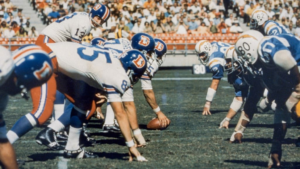
NFL Positions
The NFL (National Football League) is the premier professional American football league in the world. Each team is made up of players with very specific roles that, when combined, create offensive, defensive, and special teams strategies. Understanding NFL positions is essential for fully enjoying the game, analyzing tactics, and appreciating why certain players are so valuable.
In this article, we will explore every position in professional football, organized by offense, defense, and special teams, explaining their function, key skills, and importance on the field.
Offensive Positions in the NFL
The offense is responsible for moving the ball down the field and scoring points. It is made up of 11 players, each with clearly defined responsibilities.
Quarterback (QB)
The Quarterback (QB) is the most important position on the offensive side. They are the team leader on the field and make the majority of strategic decisions before and after the snap. Their main role is to throw the ball to receivers, but they may also hand it off to a running back or run with it themselves.
Legendary players like Tom Brady and Patrick Mahomes demonstrate how this position can change the fate of an entire franchise. A quarterback needs vision, accuracy, leadership, and the ability to read the opposing defense.
Running Back (RB)
The Running Back is primarily responsible for running the ball. They also participate in passing plays as an additional receiver. Speed, strength, and agility are critical to break tackles and gain yards after contact.
Within this category, there are subtypes like the Halfback (HB) and Fullback (FB), the latter focusing more on blocking to create space for the ball carrier.
Wide Receiver (WR)
Wide Receivers specialize in catching passes. They typically line up on the outside edges of the offensive formation and aim to get open from defenders to catch the ball.
They require exceptional speed, hand-eye coordination, and the ability to run precise routes. WRs are often the stars in long and highlight-reel plays.
Tight End (TE)
The Tight End combines the roles of receiver and blocker. Positioned near the offensive line, they can both protect the quarterback and go out for passes.
This versatility makes the tight end a key strategic piece in modern offensive schemes.
Offensive Line
The offensive line protects the quarterback and opens running lanes. It consists of five positions:
- Center (C)
- Guard (G)
- Tackle (T)
The Center starts the play with the snap, while the Guards and Tackles block defenders. Though they may not get as much media attention, they are critical to the offense’s success.
Defensive Positions in the NFL
The defense’s goal is to stop the opposing team from advancing and scoring.
Defensive Line (DL)
The defensive line faces the offensive line head-on. It includes:
- Defensive Tackle (DT)
- Defensive End (DE)
Their main responsibilities are pressuring the quarterback and stopping the run.
Linebackers (LB)
Linebackers are often called the “heart” of the defense. Positioned behind the defensive line, they have multiple responsibilities: stopping the run, covering receivers, and rushing the quarterback.
There are three main types:
- Middle Linebacker (MLB)
- Outside Linebacker (OLB)
Linebackers need both tactical intelligence and physical ability to adapt quickly to each play.
Cornerbacks (CB)
Cornerbacks cover Wide Receivers. They need speed and quick reflexes to prevent catches and defend passes.
In a league increasingly focused on passing, cornerbacks are critical.
Safeties (S)
Safeties are the last line of defense. They are divided into:
- Free Safety (FS)
- Strong Safety (SS)
Their job is to prevent long plays and support both pass coverage and run defense.
Special Teams Positions in the NFL
Special teams participate in kicking plays.
Kicker (K)
The kicker is responsible for field goals and extra points. Historic games like Super Bowl LI show how crucial every point can be in decisive moments.
Punter (P)
The punter kicks the ball on fourth down when the team cannot advance enough yards. The goal is to push the opposing team as far back as possible.
Long Snapper (LS)
The long snapper delivers the snap in field goal and punt situations. Accuracy is vital, even though the role often goes unnoticed.
Hybrid Positions and Modern Evolution
Modern NFL teams have evolved significantly. Teams like the Kansas City Chiefs and the San Francisco 49ers use innovative schemes with versatile players.
Today, there are positions like:
- Edge Rushers (specialists in pressuring the QB)
- Slot Receivers (interior receivers)
- Nickelbacks (additional defensive backs in passing situations)
This evolution has made NFL positions more flexible and adaptable.
Strategic Importance of Each Position
Every NFL position plays a specific role in a highly coordinated system. A talented quarterback needs a strong offensive line. A star receiver needs a precise passer. A dominant defense relies on communication between linebackers and safeties.
Depth in the roster is also crucial, as the regular season is grueling and culminates in the playoffs, with the ultimate goal of reaching the Super Bowl.
Understanding positions allows fans to analyze games in detail and appreciate the strategic complexity that sets American football apart from other sports.
Conclusion
NFL positions form the backbone of professional American football. From the leadership of the quarterback to the precision of the kicker, every role is essential to team performance. The offense seeks to score, the defense aims to stop them, and special teams can shift the momentum in seconds.
The modern NFL has made many positions more dynamic and versatile, increasing competition and excitement. Knowing these positions not only enhances the fan experience but also highlights the tactical and physical demands of the league.
(FAQs)
1. How many positions are there in the NFL?
There are 11 players on the field per team at a time, divided into offense, defense, and special teams. In total, considering all variations, there are over 20 specific roles.
2. What is the most important position in the NFL?
The quarterback is generally considered the most important player due to leadership and decision-making in every offensive play.
3. What is the difference between a linebacker and a defensive end?
The linebacker plays behind the defensive line and has mixed responsibilities (covering and tackling), while the defensive end focuses more on rushing the quarterback and stopping the run from the line of scrimmage.
4. What do special teams do?
Special teams participate in kicking plays, including field goals, punts, and returns. They are crucial for field position and scoring.
5. Have NFL positions changed over time?
Yes, the modern NFL has evolved toward more versatile schemes, with hybrid positions combining offensive and defensive skills depending on the team’s strategy.